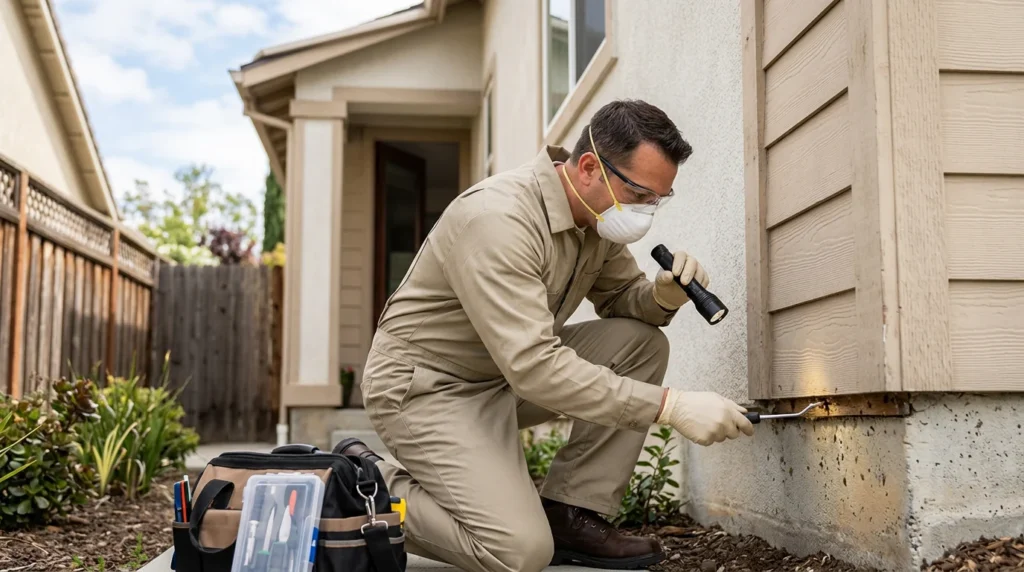
Quick answer: The best termite control in Athens, GA usually combines a professional inspection with a long-lasting treatment matched to your home and termite pressure. For most houses, that means a non-repellent liquid soil treatment around the foundation or a baiting system, plus moisture and wood-to-soil contact fixes. The right choice depends on construction type, access, and whether termites are active or just a risk.
Start With an Inspection, Not a Spray
Termite control works best when you know what you’re fighting and where. In Athens, the most common concern is subterranean termites, which travel from soil to wood through mud tubes or hidden cracks. A proper inspection checks the crawlspace or basement, foundation walls, expansion joints, plumbing penetrations, and any areas where wood touches soil.
Use the inspection findings to pick a direction. (1) Clear signs of active termites (mud tubes, fresh damage, live termites) often point toward a liquid non-repellent treatment to create a treated zone at the soil/foundation interface—especially for slabs where entry may be at cracks and plumbing penetrations. (2) No activity but higher risk or limited access (tight crawlspaces, lots of hardscape, sensitive landscaping) can make monitored baits a practical option. (3) If you see risk factors but aren’t sure where they’re entering, a combination approach plus monitoring can cover more bases.
If you’re comparing options, treat the inspection as the decision point. A good inspector will point out conducive conditions like damp crawlspaces, clogged gutters dumping water at the foundation, mulch piled high against siding, and wood debris under porches. Pairing treatment with moisture control and wood-to-soil contact fixes can improve long-term control and make follow-up inspections more straightforward. People searching for best termite control often start here because the “best” plan is the one that fits the house.
Be cautious with DIY “termite sprays.” Over-the-counter products often don’t reach the colony and may disrupt foraging patterns, which can make the problem harder to evaluate. Termites usually require a targeted system that either creates a continuous treated zone in soil or uses bait to reduce a colony over time.
Liquid Barrier vs. Baits: How to Choose
Two mainstream approaches are liquid non-repellent treatments and baiting systems. A liquid treatment is applied into the soil around and sometimes under the foundation (through trenches and drilled slabs). Non-repellents are designed so termites can’t detect them; they move through treated zones and can spread the active ingredient within the colony. This approach is commonly chosen when there’s confirmed activity or when you want broad perimeter protection.
Baiting systems place stations in the ground around the home. Termites find the bait, share it, and the colony declines gradually. Baits can be a good fit when you want minimal drilling, have complex construction where a continuous liquid zone is hard to achieve, or prefer a monitored system that’s serviced regularly. The trade-off is that baits rely on termites encountering the stations and can take longer to address active infestations.
Some homes do best with a combination: a liquid treatment at high-risk or active areas plus baits for ongoing monitoring. The best plan is the one that covers likely entry points for your specific foundation type and keeps access available for rechecks.
Common Athens-Area Risk Factors to Fix
Termites need moisture and hidden access. In Athens’ humid seasons, crawlspaces can stay damp, and that moisture can also encourage wood decay, which makes wood easier to invade. Improving drainage, extending downspouts, and keeping gutters clear helps reduce moisture at the foundation.
Also look for direct pathways: soil piled against siding, mulch touching wood trim, deck posts set in soil, and firewood stacked against the house. Keep a visible inspection gap between soil/mulch and siding, and store wood away from the foundation. Inside a crawlspace, remove scrap lumber and cardboard, and consider a ground vapor barrier if the soil is bare.
Finally, watch for signs that deserve a call: pencil-thin mud tubes on foundation walls, blistered paint, hollow-sounding wood, tight-fitting doors/windows from moisture, and discarded wings near windowsills. Swarmers are often noticed in spring in North Georgia, though timing can vary with weather. For local help evaluating your home and treatment options, contact Athens Exterminating.