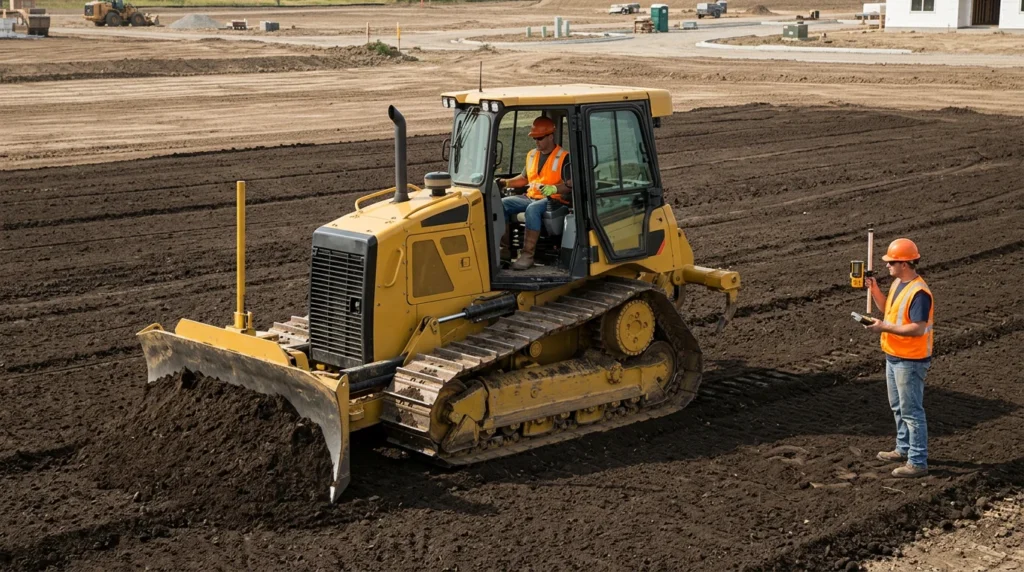
Quick answer: You likely need grading and leveling if water pools near your foundation, your yard stays soggy days after rain, you see erosion channels, or you’re planning a patio, driveway, sod, or drainage system. These services reshape the ground so it sheds water properly and creates a stable base for landscaping and hardscapes. Done right, it reduces muddy spots, prevents washouts, and protects structures from moisture problems.
Signs Your Property Needs Regrading
Puddles that linger, a lawn that feels spongy, or water that runs toward your house are classic clues the slope isn’t doing its job. You might also notice bare soil appearing on high spots, mulch washing into beds, or a “bathtub ring” of sediment after storms. These are all hints that water is concentrating in the wrong places instead of spreading out and draining away.
If you’re adding a patio, walkway, shed, or new sod, the ground needs to be shaped first so the surface stays even and doesn’t settle into low spots. That’s where grading and leveling services come in: they correct the pitch of the yard and smooth problem areas so water flows away from structures and the finished surface holds up.
Cracks in a walkway, doors that start sticking, or dampness in a crawlspace can have multiple causes, but poor drainage often contributes. If water repeatedly collects near the foundation, regrading is a common first step before adding more complicated drainage solutions.
Quick Self-Check You Can Do This Weekend
Hose test for pooling: Run a hose for 10–15 minutes on a suspect area, then shut it off and watch for 30 minutes. Water that gathers into a pond or doesn’t move implies a low pocket or compacted soil that isn’t letting water sheet-flow across the surface.
Foundation “negative grade” check: Walk the perimeter after a rain and look for a damp band, splash marks, or soil that’s lower right at the wall than a few feet out. If the ground falls toward the house, surface water is being invited to the foundation line.
Downspout discharge check: During rain, confirm each downspout empties well away from the foundation and doesn’t dump into a low spot. If you see erosion or a soggy pad where it lands, the yard may need a swale, extension, or regrading to carry that water onward.
Low-pocket spotter: Push a screwdriver or soil probe into the ground in a grid where it stays wet. Easy penetration next to hard “brick-like” spots often points to uneven compaction or buried debris; those areas commonly settle into dips and keep collecting water.
Practical Guidelines and Common Causes of Low Spots
General slope guideline (not a code): A commonly used target is for soil to slope away from a foundation about 6 inches over the first 10 feet. The exact requirement can vary by site and jurisdiction, so follow local building rules and any drainage easements.
Don’t export problems: Any grading plan should keep runoff on your property until it reaches an approved discharge point. Avoid directing water onto a neighbor’s yard, sidewalk, or driveway, and be mindful of property lines, swales, and shared drainage paths.
Why yards settle and get wavy: Low spots often come from poorly compacted fill, soil washing out along hidden flow paths, decaying roots or buried organic debris, and repeated freeze-thaw or heavy equipment traffic. Downspouts that dump in one place can also carve channels and create depressions over time.
When to Call a Pro and What to Gather for an Estimate
Decision box — call a pro if you have:
• Water getting into a basement/crawlspace or consistent wetness at the foundation line
• Erosion that keeps returning after you reseed or add mulch
• Standing water that remains longer than 48 hours after rain
• Any regrading that could change how water crosses a property line or shared swale
• Projects needing base prep and compaction (patios, driveways, pavers) where settling would be costly
Before you request pricing, document the situation so the conversation is specific. Take photos of problem areas during and after rain, sketch or note downspout locations and where they discharge, mark the soggy spots and any erosion channels, and flag where you plan hardscape or new planting beds. White Oak Tree Company can use that information to talk through options more efficiently.