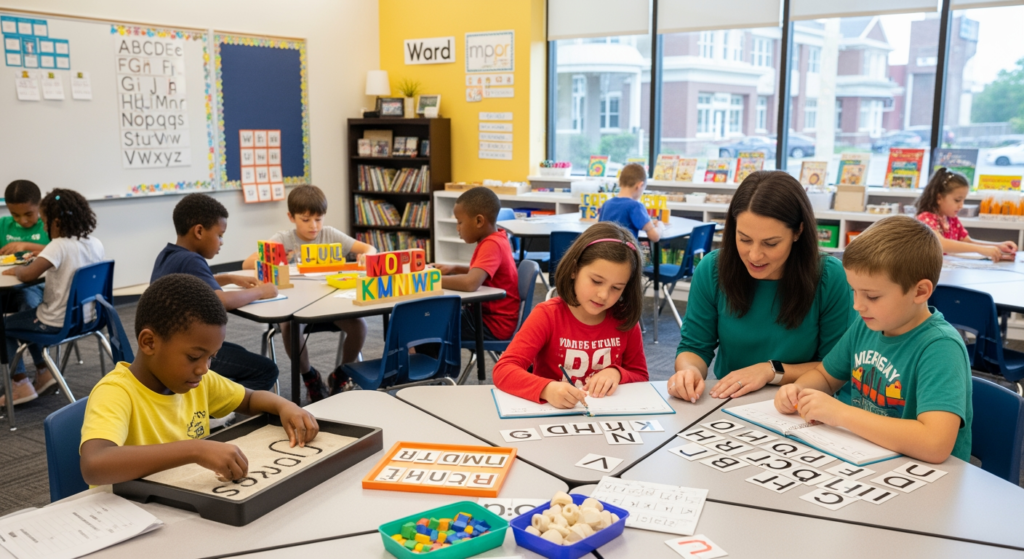
I remember the mix of relief and confusion when I first started looking for an Orton-Gillingham option for my child here in Lawrenceville. If you’re searching for an Orton-Gillingham School Lawrenceville GA, you’re not alone — many families in this area want a school that combines structured literacy instruction with a warm, small-school feel. For an overview of statewide literacy efforts and resources that inform school programs, see the Georgia Department of Education homepage for context and guidance on reading initiatives across the state.
Why Orton-Gillingham matters for readers
Orton-Gillingham is more than a tutoring method; it’s a structured, multisensory approach built to help students who struggle with decoding, spelling, and fluency. I’ve seen children who were discouraged by reading suddenly find strategies that work for them. The approach breaks skills into clear, sequential steps and teaches them using sight, sound, and touch so learning sticks.
Who benefits most
This method is traditionally used for students with dyslexia or other language-based learning differences, but it also helps any child who needs explicit, systematic reading instruction. In Lawrenceville and the wider Gwinnett County area, parents often seek this approach when general classroom supports aren’t enough. A good Orton-Gillingham program meets each student where they are and builds confidence alongside skills.
How a local Orton-Gillingham school typically structures programs
When I toured nearby programs, I looked for clear routines and individualized plans. A dependable program usually includes a mix of small-group and one-on-one instruction, daily practice, and regular progress checks. Classroom teachers and reading specialists should use the same language and steps so students get consistent reinforcement.
Classroom features to expect
Look for these practical elements in a school’s program:
- Daily, structured literacy lessons that follow a scope and sequence aligned with Orton-Gillingham principles.
- Multisensory activities—letter tiles, sand trays, and oral rehearsal—to strengthen memory and retrieval.
- Frequent, measurable progress monitoring so instruction can be adjusted quickly.
- Collaboration between classroom teachers, interventionists, and families to support carryover at home.
Selecting the right program in Lawrenceville
Choosing a school felt like sorting through a lot of information quickly. Here are practical criteria I used to narrow choices in this area:
Credentials and training
Ask whether staff have formal Orton-Gillingham training or related structured literacy certification. Some schools employ teachers trained through recognized Orton-Gillingham academies, while others use vetted professional development in structured literacy. Both are valid, but consistent, high-quality training across staff is a key marker.
Program transparency
I preferred schools that were explicit about daily schedules, teacher-to-student ratios, and assessment tools. If a school can’t describe what a literacy lesson looks like or how progress is measured, that’s a red flag. The best programs welcome classroom observations and will share samples of the scope and sequence they follow.
Questions to ask when you visit
Use this short checklist during tours or intake meetings so you don’t forget the essentials. I keep these questions handy when evaluating programs in and around downtown Lawrenceville and neighboring communities.
- How do you screen new students for reading strengths and needs?
- What specific Orton-Gillingham or structured literacy training does staff have?
- What is the frequency and format of progress reporting?
- How do you adapt lessons when a student moves quickly or needs more time?
Daily supports families can expect
Beyond instruction, successful Orton-Gillingham schools provide routines that make home and school learning connect. These supports usually include take-home activities that reinforce the multisensory methods used in class, tip sheets for parents, and regular consultations with reading specialists to set homework goals.
Homework done right
Good homework is short, explicit, and tied to the day’s lesson. You shouldn’t see lots of busywork; instead, expect targeted practice replicating classroom cues. Quick wins—like short decodable readers—help students feel successful and reinforce the skills taught that day.
How schools measure progress
Schools I trust in the region use a combination of informal and formal checks. Informal checks include one-minute timed readings and running records to observe decoding and fluency. Formal assessments might be standardized screening tools administered at entry and repeated at intervals to track long-term growth.
Meaningful reporting
Progress reports should translate data into next steps. When I reviewed sample reports, I looked for clear statements like “Student can decode syllable types A and B with 80% accuracy; next focus: multisyllabic word decoding.” That kind of language showed the school was using data to guide instruction.
Trends shaping literacy programs right now
Two important trends have changed how families and schools approach reading instruction recently, and they matter for anyone looking in Lawrenceville.
The science of reading movement
The “science of reading” has pushed many schools to prioritize phonology, phonics, and structured literacy. If a program emphasizes explicit skill instruction and evidence-based routines, it’s likely aligned with this approach. I’d ask whether teachers use scientifically grounded strategies and how recent their training is.
Teletherapy and hybrid supports
The pandemic showed many programs how to deliver effective virtual or hybrid reading sessions. Some families in our area follow a blended model: in-person school for core instruction and virtual one-on-one sessions for targeted practice. These options can fill gaps when local specialists are limited.
How the school connects to the community
Lawrenceville is the county seat of Gwinnett County and has a close-knit community feel, especially in Old Town. Schools that partner with local libraries, pediatric clinics, and community centers make it easier for families to get assessments, resources, and social support. I always ask about local partnerships, because they often mean faster access to screenings and enrichment programs.
Top concerns parents raise and how schools solve them
Here are common worries I hear from other parents and practical ways a strong Orton-Gillingham school addresses them:
- Concerns about teacher expertise — Schools invest in ongoing professional development and have specialist staff for complex cases.
- Fear of stigma — Many programs integrate supports in ways that preserve a child’s dignity, using short pull-outs or small groups rather than large labels.
- Logistics like scheduling — Flexible scheduling, after-school options, and parent communication tools help families manage routines.
- Long-term progress — Regular re-assessment and clear goals ensure instruction evolves as the student grows.
Actionable first steps for parents in Lawrenceville
When you’re ready to move forward, these steps helped me turn confusion into a clear plan. They’re practical and easy to follow so you can prioritize quickly for your child.
Step-by-step starter plan
- Request a literacy screening or review any recent reading assessments from school to identify specific needs.
- Schedule a tour or observation of a classroom to see instruction in action and note the student-to-teacher ratio.
- Ask for examples of lesson plans and progress reports so you can compare how different programs document growth.
- Get a clear outline of aftercare or tutoring options if additional practice will be needed beyond school hours.
What good success looks like
For me, progress is more than test scores. Success means a child reads with less effort, enjoys longer books, and shows confidence in class discussions. Schools that celebrate process as well as outcomes keep motivation alive. You should see steady gains in decoding skills, improved reading stamina, and better self-advocacy from your child.
Realistic timelines
Change takes time. Many educators estimate clear gains in decoding and fluency over the course of several months with consistent, daily instruction. I found that setting short-term goals—three to six weeks—helps everyone stay focused and feel encouraged by incremental wins.
Cost and enrollment considerations
Private, specialized programs vary in cost and capacity. Waitlists are common, so I recommend starting your search early, especially for fall enrollment. Ask about tuition, sliding-scale options, and whether the school can coordinate with public school services or provide documentation for outside funding or scholarships.
Final tips for parents touring schools in this area
When you visit Lawrenceville schools, take notes on specific examples: a teacher’s response when a child struggles, the types of multisensory materials used, and how comfortable staff are answering questions about dyslexia and reading science. Trust your instincts—if the program feels rigid or dismissive, keep looking. The right fit is both evidence-based and child-centered.
Finding the right Orton-Gillingham school in Lawrenceville, GA, is a journey, but you don’t have to walk it alone. Start with clear questions, look for measurable progress, and choose a program that communicates honestly and supports your child’s whole development. If you want a local option that blends small-class attention with structured literacy, consider reaching out to the Sage School for a tour and to learn about their Orton-Gillingham-informed programs in our community. Sage School can help you take the next step in Lawrenceville.